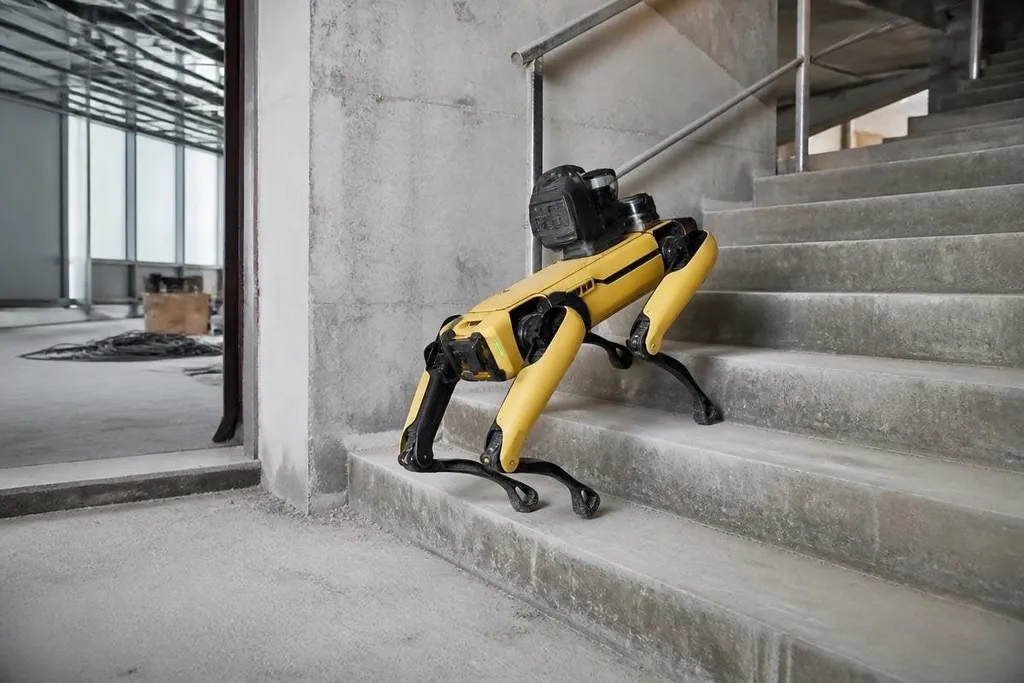
Robot dogs can walk over rough ground, climb stairs, and carry cameras into places that wheels cannot reach. Their value comes from the work they can repeat safely, not from the shape of their bodies.
- Four legs keep the robot moving across broken ground
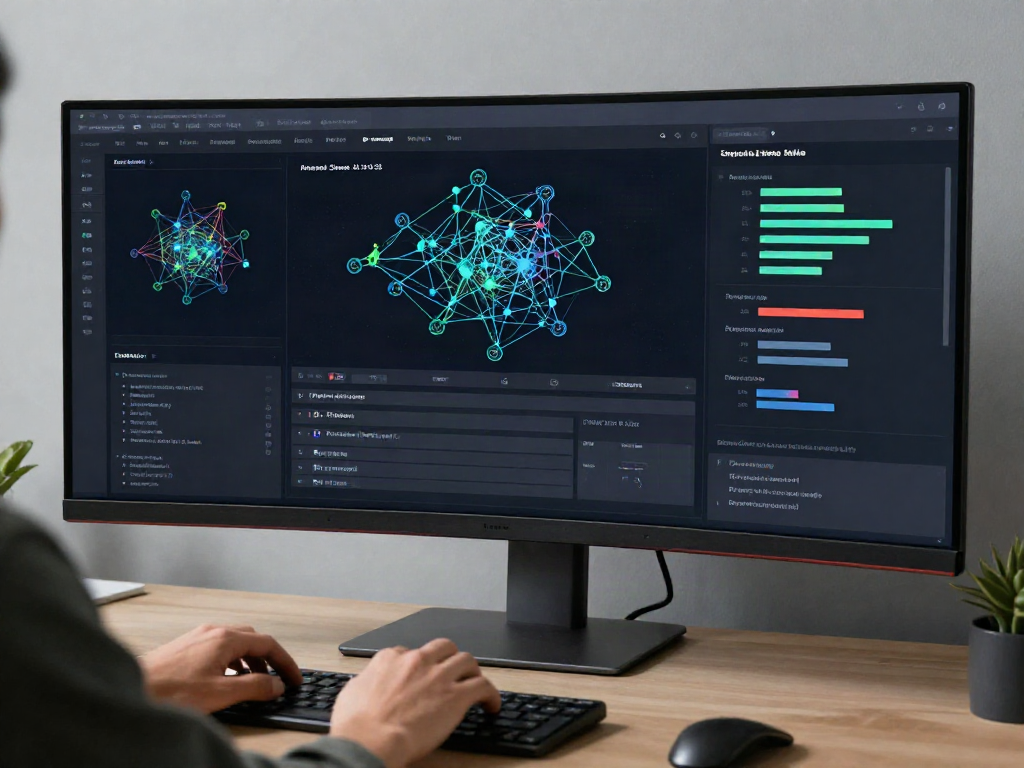
- Cameras and LiDAR help it build a map of nearby space
- Remote control remains important when the task is unclear
Why legs matter
Wheeled robots work well on flat floors. A step, loose gravel, or a narrow gap can stop them. A quadruped robot uses four legs to place its feet around those obstacles, then shifts its weight to stay upright.
That movement needs more than motors. Each robot measures the position of every leg, the force at its feet, and the motion of its body. Its control software uses those signals to adjust each step while it walks.
This makes robot dogs useful on stairs, factory floors, outdoor paths, and other ground that is hard for a wheeled platform. The same design also brings a cost: legs use many moving parts, and each joint needs power, control, and protection from damage.
Sensors turn movement into useful work
Walking gets the robot to a location. Sensors tell it what to do there. A camera can record a scene, while LiDAR sends out laser pulses to measure nearby surfaces and build a three-dimensional map.
A robot dog can use that map to avoid obstacles and return to a known route. Some systems also carry thermal cameras, gas sensors, or microphones. The right sensor depends on the job, since a heat check needs different hardware from a pipe inspection.
The robot's body helps here because it can hold its sensor above debris, point it toward a valve, or move close to equipment. A small change in height can affect what the camera sees, so leg control and inspection work are linked.
A robot dog that spots a valve in a controlled demo still needs proof from a real site. Robot24 reports on the companies and machines behind robotics work, so you can compare the task, setting, and result before looking at where these robots fit.
Where robot dogs fit today
On repeat inspection routes, a robot may record the same gauge, pipe, or doorway each time and flag a change for a person to check.
Construction teams can use a walking platform to collect site images. Public safety teams may send one into a damaged area before a person enters. Research groups use the same type of body to test walking control, mapping, and machine learning.
Remote operation still matters. A person can guide the robot around an unknown object, select a new inspection point, or stop it when the scene falls outside its training. Autonomous software handles routine movement, while teleoperation covers the parts that remain hard to predict.
That split changes the job rather than removing the need for people. Workers still choose the route, inspect the data, maintain the robot, and decide what a sensor reading means.
The limits are plain
A robot dog needs regular charging and care for its joints, batteries, cameras, and communication links. Dust, rain, heat, and impacts can reduce how long it works or force a person to recover it.
Its ability to walk does not mean it understands every scene. A cable on the floor, a reflective surface, or a blocked route can confuse its map. An operator may need to take control, and the robot may still fail to complete the task.
Payload also matters. A robot carrying a camera has more freedom than one carrying a heavy tool or a large battery. More weight changes balance, power use, and walking time, so a machine that looks capable in a video may fit only a narrow job.
I’d judge a robot dog by the inspection result it produces, not by how well it handles a staged obstacle course.
A practical buying check
Use this list before a pilot or purchase:
- Define the route: record stairs, slopes, loose ground, doors, and narrow spaces.
- Name the task: decide what the robot must measure, record, or carry.
- Check the link: test control and data transfer across the full work area.
- Set a recovery plan: decide who retrieves the robot after a stop or fall.
- Price the service: include charging, repairs, training, software, and staff time.
The next useful step is a small route test with the real sensor and the real operator. If the robot cannot produce repeatable data there, extra walking ability will not fix the business case.